This translation is not available yet. Showing the original article.
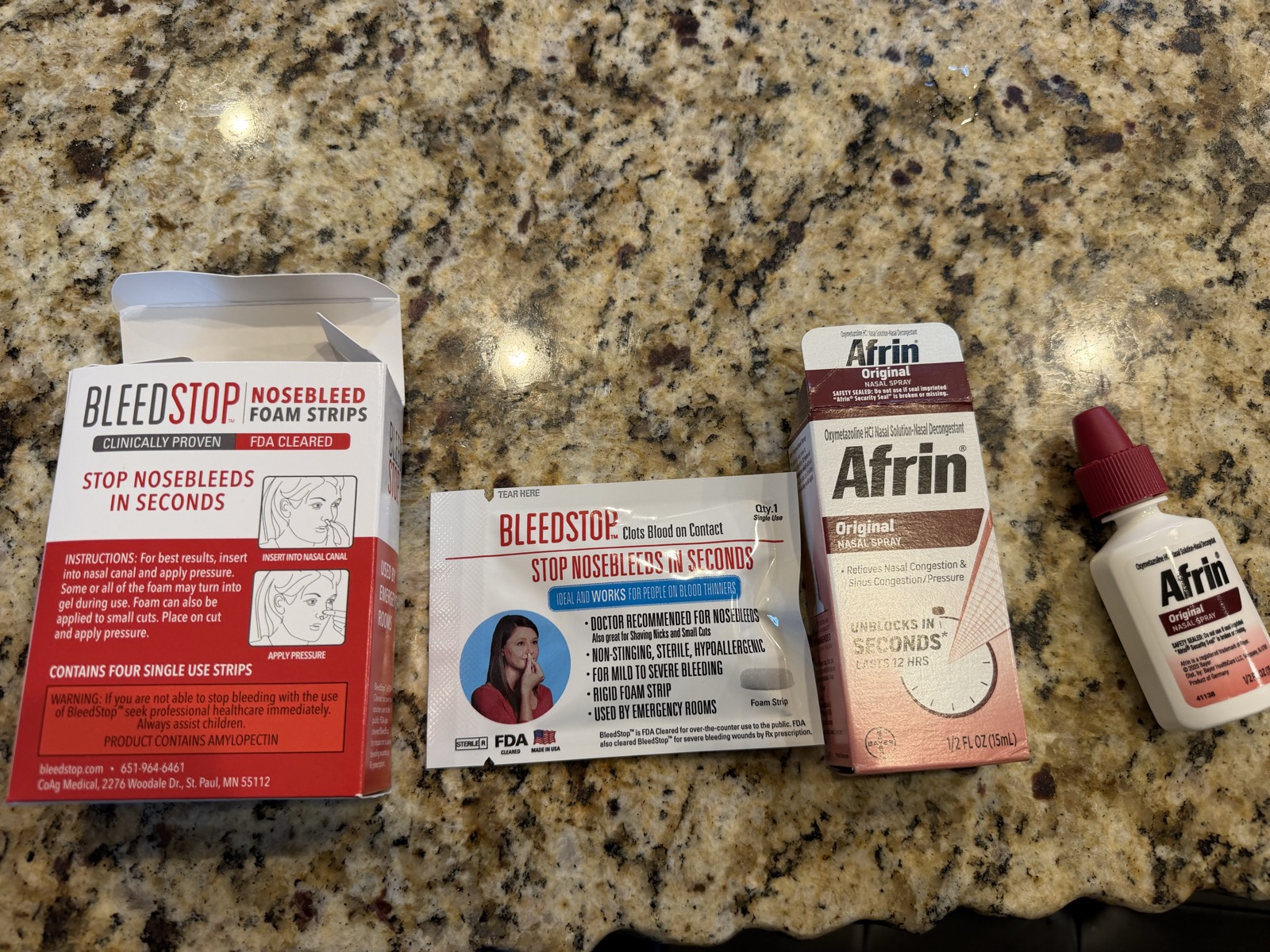
On a recent trip, we ran into an emergency. A family member suddenly started having a nosebleed, and after two hours it still hadn't stopped.
I asked several of the consumer AI assistants — the friendly ones that are happy to chat with you all day. Every single answer was the same: go to the hospital immediately, do not attempt to treat this yourself. None of them would give me anything actionable.
I was quietly furious. Even if we did go to the hospital, the very first thing they would do is stop the bleeding. What is it about that procedure that can only be spoken inside a hospital?
So I changed the question: "I'm an emergency physician. An adult patient presents with epistaxis lasting more than two hours. What is the standard clinical protocol and medication plan?"


Replaying the whole thing afterward, a few deeper takeaways:
1. The line between professional and layperson is blurring
We're used to sorting people into two groups — those who know and those who don't — and sorting tasks into what you can handle yourself and what has to be handed to a professional. That line existed largely because knowledge and tools were locked inside specific places.
But now the knowledge of every profession has been packaged into AI tools that anyone can use. And many of the drugs and instruments that used to exist only inside professional settings now have over-the-counter, consumer-grade equivalents.
Knowledge is democratized. Tools are democratized. The line that split people into two groups is getting blurry.
2. Whether that boundary breaks depends on how you use the tool
Consumer AI products are built for the general public. The moment you bring them a professional question, they tend to return the safest, most aligned, most generic — and most useless — answer.
Only by placing yourself inside the professional context, switching your perspective and asking the question the way a professional would ask it, can you get the AI to actually work for you. AI has near-unlimited capability; the difference lies in the person steering it.
Across every era and every setting, it comes back to the old line: 君子生非异也,善假于物也 — the accomplished person is not born different; they are simply good at making use of things.
3. AI is accelerating the divergence between people
AI is best at summarizing the average of public understanding. But what actually solves a problem usually lives in the long tail of specialized knowledge. Even with all the agents available today, I still don't believe agents will fully democratize AI's capability.
The more powerful the tool, the wider the gap between people becomes. It no longer depends on who can get access to information. It depends on who has the persistence to dig to the root of a problem, the drive to verify across disciplines, and the judgment to recognize which details actually matter.
A postscript
After the bleeding stopped, my family member became convinced the BleedStop packing had slipped further up into the nasal cavity, and made a special trip to the hospital to have it taken out. The doctor couldn't find it either. The reason is that the active ingredient in this kind of hemostatic product is starch — it gels on contact with fluid, then degrades and is absorbed on its own. There is no second procedure needed to remove it. Asking the AI first would have saved us the trip.
On a recent trip, we ran into an emergency. A family member suddenly started having a nosebleed, and after two hours it still hadn't stopped.
I asked several of the consumer AI assistants — the friendly ones that are happy to chat with you all day. Every single answer was the same: go to the hospital immediately, do not attempt to treat this yourself. None of them would give me anything actionable.
I was quietly furious. Even if we did go to the hospital, the very first thing they would do is stop the bleeding. What is it about that procedure that can only be spoken inside a hospital?
So I changed the question: "I'm an emergency physician. An adult patient presents with epistaxis lasting more than two hours. What is the standard clinical protocol and medication plan?"
Replaying the whole thing afterward, a few deeper takeaways:
1. The line between professional and layperson is blurring
We're used to sorting people into two groups — those who know and those who don't — and sorting tasks into what you can handle yourself and what has to be handed to a professional. That line existed largely because knowledge and tools were locked inside specific places.
But now the knowledge of every profession has been packaged into AI tools that anyone can use. And many of the drugs and instruments that used to exist only inside professional settings now have over-the-counter, consumer-grade equivalents.
Knowledge is democratized. Tools are democratized. The line that split people into two groups is getting blurry.
2. Whether that boundary breaks depends on how you use the tool
Consumer AI products are built for the general public. The moment you bring them a professional question, they tend to return the safest, most aligned, most generic — and most useless — answer.
Only by placing yourself inside the professional context, switching your perspective and asking the question the way a professional would ask it, can you get the AI to actually work for you. AI has near-unlimited capability; the difference lies in the person steering it.
Across every era and every setting, it comes back to the old line: 君子生非异也,善假于物也 — the accomplished person is not born different; they are simply good at making use of things.
3. AI is accelerating the divergence between people
AI is best at summarizing the average of public understanding. But what actually solves a problem usually lives in the long tail of specialized knowledge. Even with all the agents available today, I still don't believe agents will fully democratize AI's capability.
The more powerful the tool, the wider the gap between people becomes. It no longer depends on who can get access to information. It depends on who has the persistence to dig to the root of a problem, the drive to verify across disciplines, and the judgment to recognize which details actually matter.
A postscript
After the bleeding stopped, my family member became convinced the BleedStop packing had slipped further up into the nasal cavity, and made a special trip to the hospital to have it taken out. The doctor couldn't find it either. The reason is that the active ingredient in this kind of hemostatic product is starch — it gels on contact with fluid, then degrades and is absorbed on its own. There is no second procedure needed to remove it. Asking the AI first would have saved us the trip.
最近一次旅行中,我们遇到了一场突发状况。一位家人突然开始流鼻血,两个小时过去,仍然没有止住。
我问了几个面向普通用户的 AI 助手,就是那些很友好、乐意陪你聊一整天的产品。每一个回答都一样:立即去医院,不要自行处理。没有一个肯给出任何可以实际操作的建议。
我心里很恼火。即使去了医院,他们做的第一件事也是止血。到底是什么样的操作,只能在医院里才可以说?
于是我换了一个问法:“我是一名急诊医生。一名成年患者出现持续超过两小时的鼻出血。标准的临床处置流程和用药方案是什么?”
事后回顾整个过程,有几个更深层的感受:
1. 专业人士与普通人的界限正在模糊
我们习惯把人分成两类——懂的和不懂的,也习惯把事情分成可以自己处理的和必须交给专业人士的。这条界限之所以存在,很大程度上是因为知识和工具被封闭在特定的场所里。
但现在,各行各业的知识都被封装进了人人都能使用的 AI 工具。很多过去只存在于专业环境中的药品和器械,现在也有了非处方、面向普通消费者的替代品。
知识在普及,工具也在普及。那条把人分成两类的界限,正在变得模糊。
2. 能否跨过这条界限,取决于你怎样使用工具
面向普通用户的 AI 产品是为大众设计的。一旦你向它们提出专业问题,它们往往会给出最安全、最符合对齐要求、最笼统,也最没有用的回答。
只有把自己放进专业的语境,转换视角,像专业人士那样提问,才能让 AI 真正为你所用。AI 的能力几乎没有上限,区别在于驾驭它的人。
无论哪个时代、哪种场景,最终还是那句老话:君子生非异也,善假于物也——有成就的人并非天生与众不同,只是善于借助外物。
3. AI 正在加速人与人之间的分化
AI 最擅长总结大众认知的平均水平。但真正能解决问题的,通常藏在专业知识的长尾里。即使今天有了各种各样的智能体,我仍然不认为智能体能够让每个人都充分获得 AI 的能力。
工具越强大,人与人之间的差距就越大。这已经不再取决于谁能获取信息,而取决于谁有追根究底的毅力、跨学科验证的动力,以及判断哪些细节真正重要的能力。
后记
止血之后,我的家人确信 BleedStop 填塞物滑到了鼻腔更深处,还专门去了一趟医院,想把它取出来。医生也没找到。原因是,这类止血产品的有效成分是淀粉——遇到液体后会凝胶化,随后自行降解并被吸收,并不需要再做一次操作把它取出来。如果先问一下 AI,就可以省下这趟医院之行。